Metal vs Plastic Roofing Sheets: Which One Will Actually Save You Money in the Long Run?
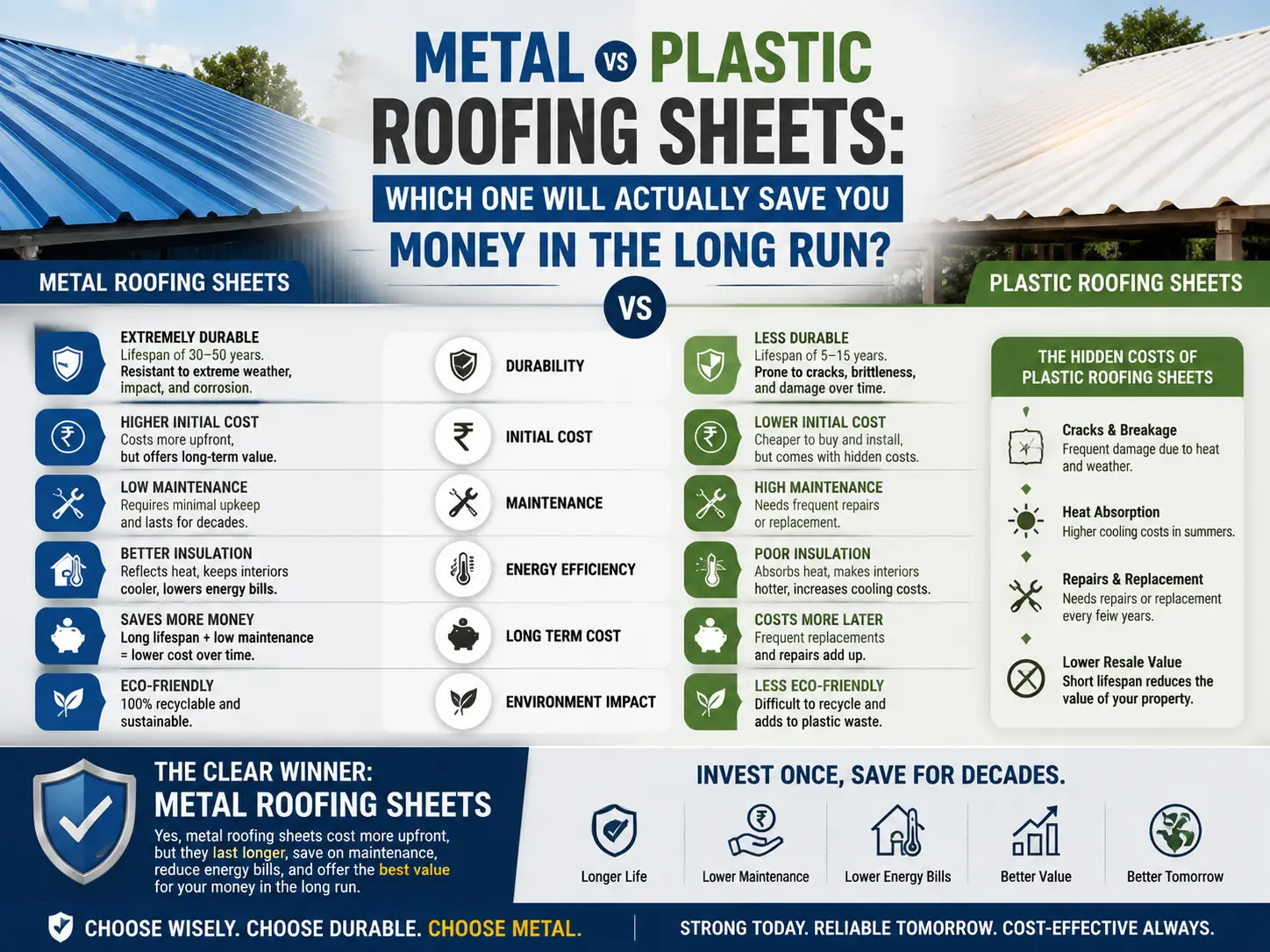
Choosing a roof isn't just about covering your head it's a decision that affects your home's safety, energy bills, and resale value for the next 20-30 years. If you're stuck deciding between metal roofing sheets and plastic (PVC/polycarbonate) roofing sheets, you're not alone. Both are popular, both are marketed as "durable" and "affordable," but they perform very differently once real weather, real budgets, and real maintenance schedules enter the picture.
This guide breaks down the honest differences cost, lifespan, weather resistance, installation, and maintenance so you can pick the roof that fits your home, your climate, and your wallet, not just the one with the flashiest sales pitch.
Quick Comparison at a Glance
|
Factor |
Metal Roofing Sheets |
Plastic Roofing Sheets |
Lifespan |
40-70 years |
10-25 years |
Upfront Cost |
Higher |
Lower |
Weather Resistance |
Excellent (hail, wind, fire) |
Good (UV & impact vary by grade) |
Noise (rain) |
Loud unless insulated |
Moderate |
Weight |
Heavier |
Very light |
Maintenance |
Low |
Low-Medium (yellowing, brittleness) |
Recyclability |
High |
Depends on plastic type |
Best For |
Long-term homeowners, storm-prone areas |
Budget builds, patios, sheds, temporary structures |
Why Homeowners Choose Metal Roofing Sheets
1. Built to outlast the mortgage. A quality metal roof whether steel, aluminum, or copper can last 40 to 70 years with minimal upkeep, often outliving the very house it's installed on. If you're planning to stay in your home long-term, this alone can offset the higher upfront cost. Many manufacturers back metal roofing with 30-50 year warranties, which tells you how much confidence goes into the material.
2. Stands up to extreme weather. Metal sheets resist hail, high winds (often rated for gusts over 140 mph), and fire far better than most alternatives. This is exactly why insurance companies in storm-prone and wildfire-risk regions often offer premium discounts for homes with metal roofs the underwriters have seen the claims data.
3. Energy efficiency that pays you back. Reflective metal coatings bounce back solar radiant heat instead of absorbing it, keeping attics noticeably cooler in summer. Homeowners often report a 10-25% reduction in cooling costs after switching to metal, especially in hot climates. Over a decade, those savings start to meaningfully close the price gap with plastic.
4. Higher resale value. Real estate data consistently shows metal roofs recoup a strong percentage of installation cost at resale, since buyers view them as a "done for decades" upgrade rather than a future expense they'll inherit.
5. Low fire risk. Unlike some plastic materials, metal roofing is non-combustible, which matters a great deal in wildfire-prone regions and can also lower certain home insurance premiums.
The trade-offs: Higher material and installation cost, and it can be noisy during heavy rain or hailstorms unless properly insulated with underlayment. Metal can also dent from very large hail, though most modern panels are engineered to resist this.
Why Homeowners Choose Plastic Roofing Sheets
1. Budget-friendly upfront. Plastic sheets PVC, polycarbonate, or fiberglass are significantly cheaper to buy and install than metal. This makes them a strong option if you're roofing a shed, patio cover, carport, greenhouse, or working with a tight renovation budget where every dollar counts.
2. Lightweight and easy to install. Because plastic sheets weigh a fraction of what metal does, they often don't require reinforced framing or heavy-duty support structures. That cuts both labor time and structural costs, and makes plastic roofing a favorite for DIY projects and quick installs.
3. Naturally corrosion-resistant. Plastic never rusts, which makes it especially popular in coastal or high-humidity regions where metal roofing needs extra protective coating to avoid corrosion over time.
4. Light transmission options. Translucent polycarbonate sheets let you bring natural light into garages, workshops, greenhouses, or covered patios, something a solid metal roof simply cannot do. This is a major reason plastic sheeting dominates in agricultural and greenhouse applications.
5. Lower installation complexity. Because the panels are light and flexible, many plastic roofing systems can be installed faster and with fewer specialized tools, which can shave meaningful labor cost off a project.
The trade-offs: Shorter lifespan (typically 10-25 years depending on the grade and UV stabilizers used), and lower-quality plastic can yellow, warp, crack, or become brittle under prolonged sun exposure especially in consistently hot or high-UV climates. Cheaper polycarbonate sheets in particular may need replacing well before higher-grade versions.
Cost Breakdown: Upfront vs Long-Term
It's tempting to compare roofing materials purely on the price tag at checkout, but that's often misleading. Here's a more realistic way to think about it:
- Metal roofing costs more per square foot upfront, but with a 40-70 year lifespan, the effective annual cost often ends up lower than repeatedly replacing a plastic roof every 10-20 years.
- Plastic roofing wins on immediate affordability, but factor in potential replacement cycles, UV degradation, and possible early repairs into your long-term budget especially if you're in a hot or high-UV region.
- If you're roofing a primary residence you plan to keep for decades, metal usually wins on total cost of ownership.
- If you're roofing a secondary structure, rental property, or something you plan to renovate again in 10-15 years, plastic can be the smarter financial call.
Environmental Considerations
Metal roofing is highly recyclable most metal roofs are made from a significant percentage of recycled material and can be fully recycled again at end of life, making it one of the more sustainable roofing choices available. Plastic roofing's environmental footprint varies widely depending on the specific polymer used; some polycarbonate and PVC products are recyclable, but many end up in landfill after their shorter service life, which is worth factoring in if sustainability matters to your decision.
So Which One Should You Choose?
- Choose metal if you're roofing your primary home, plan to stay long-term, live in a storm-prone, hail-prone, or fire-risk area, or want the best resale value and lowest long-term cost.
- Choose plastic if you're on a tighter budget, roofing a secondary structure like a shed, carport, or greenhouse, need natural light transmission, or need a lightweight solution for weaker framing.
There's no universally "better" option only the one that's better for your specific roof, budget, climate, and how long you plan to own the property.
Frequently Asked Questions
Q: Which lasts longer, metal or plastic roofing sheets?
Metal roofing typically lasts 40-70 years, while plastic roofing sheets generally last 10-25 years depending on the material grade and UV exposure. Metal is the clear winner for longevity.
Q: Is plastic roofing cheaper than metal roofing?
Yes, plastic roofing sheets almost always have a lower upfront cost than metal. However, because plastic has a shorter lifespan, the long-term cost of ownership can end up similar or even higher than metal if you factor in eventual replacement.
Q: Which roofing material handles hail and storms better?
Metal roofing generally outperforms plastic in hail, wind, and storm resistance, which is why many insurers offer discounts for metal roofs in storm-prone regions. Higher-grade impact-resistant plastic can hold up reasonably well, but it's still more prone to cracking under severe impact than metal.
Q: Does metal roofing make homes hotter?
Not necessarily in fact, reflective metal coatings often keep attics cooler than other materials by bouncing back solar heat rather than absorbing it, which can lower cooling costs in summer.
Q: Can plastic roofing sheets be used on a main house roof?
They can, but they're more commonly used for secondary structures like sheds, carports, patios, and greenhouses due to their shorter lifespan and lower impact resistance compared to metal.
Q: Is metal roofing noisy when it rains?
It can be louder than plastic without proper insulation or underlayment, but most modern metal roofing systems include sound-dampening layers that significantly reduce rain noise.
Q: Which roofing material is more eco-friendly?
Metal roofing is generally more sustainable, it is highly recyclable and often made from recycled content. Plastic roofing's recyclability varies by polymer type, and its shorter lifespan means more frequent replacement and material waste over time.
Q: Does climate affect which material I should choose?
Yes, significantly. Hot, high-UV climates accelerate plastic degradation (yellowing, brittleness), making metal a stronger long-term choice. Coastal, high-humidity areas benefit from plastic's natural corrosion resistance, though coated metal options also perform well there.
Not Sure Which Fits Your Home? Let's Figure It Out Together
Picking the wrong roofing material is an expensive mistake to undo. Before you commit, get a free consultation with our roofing specialists, we will assess your climate, budget, and roof structure, and recommend the material that actually makes sense for your home.
👉 Get Your Free Roofing Consultation Today: no pressure, no obligation, just honest advice from people who install both materials every week.
+91 9711740008 | Talk to a Roofing Expert | Compare Costs for Your Home