Roofing Sheet Maintenance Tips: How to Protect and Extend the Life of Your Metal Roof
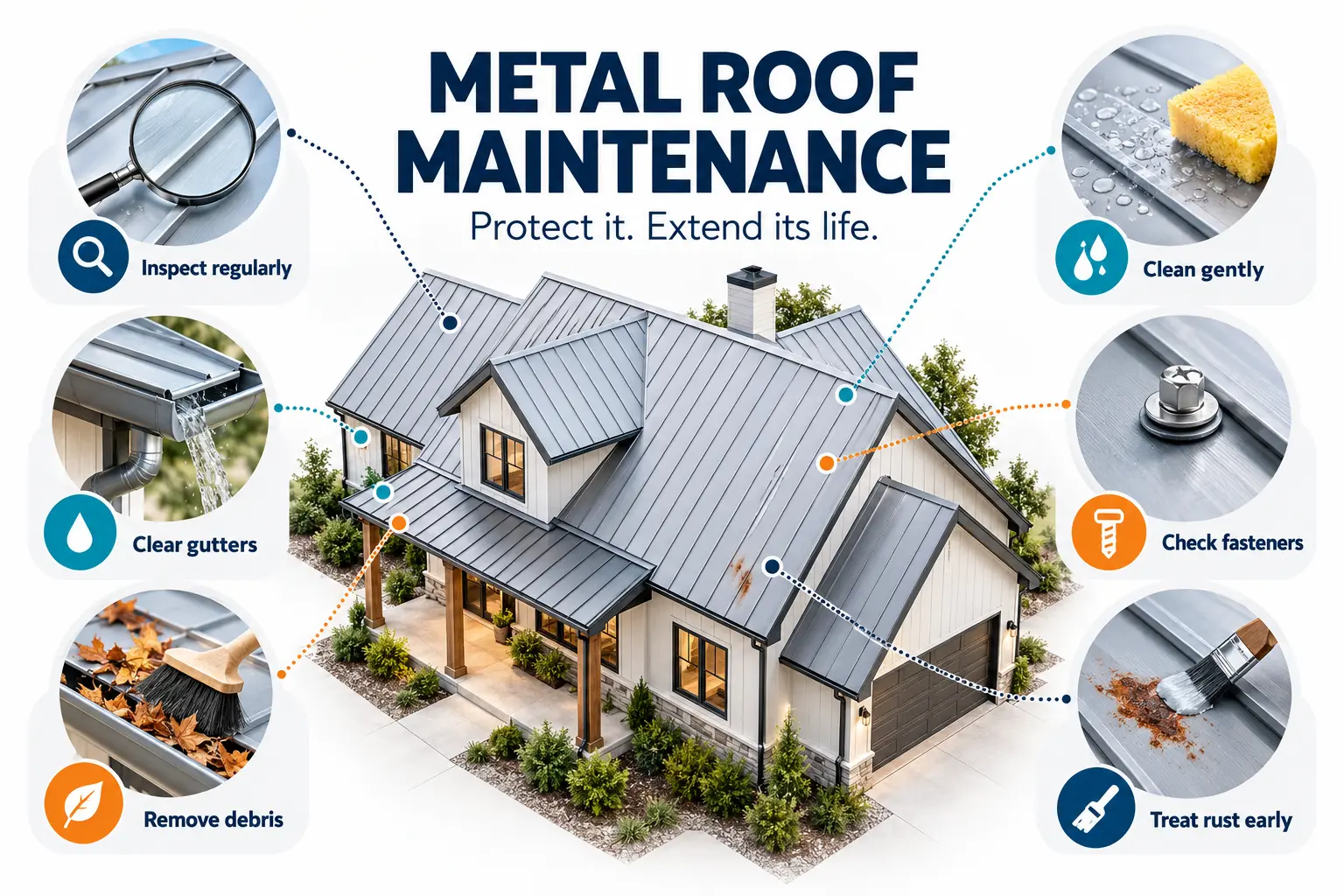
Roofing sheet maintenance means cleaning, inspecting and protecting metal roof sheets on a regular schedule. The key tips are to clear debris, check fasteners and sealants, remove rust early, avoid walking on dry sheets, and inspect after every storm. Following these steps can extend a roof’s service life significantly.
What Is Roofing Sheet Maintenance and Why Does It Matter?
Roofing sheet maintenance is the routine care of the metal sheets that cover industrial sheds, warehouses, factories, cold storage units and farm buildings. Most roofs are made from galvanized steel (GI), colour-coated steel, aluminium or, in some cases, polycarbonate. Each material resists weather well, but none is maintenance-free.
Metal roofs face constant stress from rain, humidity, dust, sun exposure, wind uplift and temperature changes. Over time, these forces can lead to surface corrosion, loose fasteners, damaged coatings and blocked drainage. Small problems that go unnoticed often turn into leaks, water damage to stored goods, and costly structural repairs.
Regular maintenance protects your investment in several ways:
- It extends the working life of the roof and delays full replacement.
- It keeps the protective zinc or paint coating intact.
- It prevents water leaks that can damage machinery, inventory and interiors.
- It helps maintain the structural performance of the purlins and frame beneath the sheets.
- It can reduce insurance claims and unplanned downtime.
How Often Should You Inspect Roofing Sheets?
For most industrial and commercial roofs, a visual inspection every three months is a sound baseline. Inspect more often in coastal areas, near chemical plants, or in regions with heavy rainfall, because salt, acid and moisture accelerate corrosion. Always carry out an extra inspection after storms, hailstorms, or strong winds.
The table below gives a practical maintenance schedule you can adapt to your building.
|
Frequency |
Maintenance Task |
|
Monthly |
Remove leaves, dust and debris from the roof surface and gutters. Check for ponding water. |
|
Quarterly |
Inspect fasteners, sealants, flashing and overlaps. Look for early rust spots or scratches. |
|
After every storm |
Check for displaced sheets, loose screws, damaged ridge caps and blocked drainage. |
|
Annually |
Clean the full roof surface, retouch damaged paint, re-coat exposed rust areas, and review the overall condition with a professional. |
What Are the Most Important Roofing Sheet Maintenance Tips?
A complete maintenance programme combines several tasks. The six tips below cover the areas where most roof failures begin.
Clean the Roof Surface Regularly
Dirt, bird droppings, chemicals and organic matter trap moisture against the sheet surface and speed up corrosion. Cleaning removes these deposits and helps you spot early damage. Clean the roof at least twice a year, and more often in dusty or industrial areas.
Check and Tighten Fasteners and Screws
Fasteners hold the sheets to the purlins and are often the first point of failure. Thermal expansion and wind vibration can loosen screws over time. Check that screws are tight without overtightening, because excessive force can crack the washer or deform the sheet. Replace any screws with corroded heads or damaged rubber washers.
Remove Rust and Apply Protective Coating
Rust on galvanized sheets usually starts at cut edges, scratches or areas where the zinc coating has worn away. Treat it early, before it spreads. Once the area is clean and dry, apply a rust-inhibiting primer followed by a compatible topcoat. Early treatment is far cheaper than replacing a sheet.
Clear Gutters, Valleys and Drainage Paths
Blocked gutters and valleys cause water to pool on the roof and seep under the overlaps. Clear them regularly, and check that downpipes are flowing freely. Standing water is one of the most common causes of premature sheet failure.
Inspect Sealants, Flashing and Overlaps
Ridge caps, wall flashing, closure strips and side laps are critical waterproofing points. Look for cracked sealant, lifted flashing, gaps at overlaps and signs of water staining on the ceiling below. Reseal or replace these components as needed using materials recommended for metal roofing.
Avoid Walking Directly on Sheets
Metal sheets, especially profiled and thin-gauge sheets, can dent, crack or distort under foot pressure. Walk only on the purlins or designated walkways. Wear soft-soled footwear, and never step on the sheets when they are wet, as they become very slippery.
How Do You Clean Roofing Sheets Safely?
Cleaning a roof is simple, but doing it safely and without damaging the coating requires a careful approach.
- Confirm safe access. Use proper fall protection, ladders and a second person where needed.
- Sweep off loose debris. Use a soft broom or blower to remove leaves, dust and grit.
- Wash with clean water. Use a low-pressure hose or a soft brush with mild, pH-neutral detergent.
- Avoid harsh chemicals. Acids, strong alkalis and abrasive cleaners can strip the zinc or paint layer.
- Rinse thoroughly. Remove all detergent residue to prevent streaking and surface damage.
- Allow the roof to dry. Inspect the surface once it is dry to spot any new scratches or rust.
Never use high-pressure washers on coloured or painted sheets, as they can lift the coating and force water into the overlaps.
How Can You Prevent Rust on Metal Roofing Sheets?
Rust prevention depends on protecting the surface and keeping it dry. Follow these steps to reduce corrosion risk:
- Inspect the surface every quarter for white rust (zinc corrosion) or red rust (steel corrosion).
- Remove loose rust using a wire brush or a non-metallic abrasive pad.
- Clean the area with a suitable solvent to remove oil, dust and residues.
- Apply a zinc-rich primer to bare galvanized areas, or an anti-corrosion primer for exposed steel.
- Finish with a compatible topcoat that matches the original colour and resists UV exposure.
- Recheck after 6 to 12 months to confirm the treatment is holding.
Keep sheets and stored materials away from wet soil, chemical fumes and salt-laden air where possible. Good ventilation under the roof also helps reduce condensation, which is a common cause of hidden corrosion.
What Common Roofing Sheet Problems Should You Watch For?
Knowing the warning signs helps you act before a small issue becomes a major repair. Look out for these common problems:
- Surface rust or white powdery deposits on galvanized sheets, often at cut edges or near fasteners.
- Faded or chalking paint on colour-coated sheets, which signals UV damage.
- Loose or missing screws, especially along the ridge and eaves where wind uplift is highest.
- Cracked or hardened sealant around flashing and ridge caps.
- Dents or deformed profiles caused by falling objects, foot traffic or equipment.
- Water stains on ceilings or purlins, which usually indicate a leak above.
- Sagging sheets or purlins, which may signal overloading or structural movement.
- Noise during wind or rain when fasteners or panels have loosened.
When Should You Call a Professional for Roof Repairs?
Routine cleaning, screw checks and minor touch-ups can be handled in-house by trained staff. However, you should call a qualified roofing contractor or structural engineer when:
- Rust has penetrated through the full thickness of the sheet.
- Multiple sheets are buckled, cracked or displaced.
- Purlins or rafters show bending, corrosion or distortion.
- Leaks persist after sealant and flashing repairs.
- The roof has been damaged by a storm, fire or heavy impact.
- Sheets need replacement, as matching profiles and gauges requires care.
- The building is being upgraded, for example to carry solar panels or extra equipment.
Working at height is dangerous. Never attempt complex repairs without proper training, safety equipment and a clear plan.
Frequently Asked Questions About Roofing Sheet Maintenance
Q1. How often should metal roofing sheets be cleaned?
Most industrial roofs should be cleaned at least twice a year. Roofs in dusty, coastal or chemical-exposed areas may need cleaning every quarter.
Q2. What is the best way to remove rust from roofing sheets?
Remove loose rust with a wire brush or non-metallic pad, clean the area, apply a zinc-rich or anti-corrosion primer, and finish with a compatible topcoat.
Q3. Can I pressure wash a colour-coated roof?
Avoid high-pressure washing on colour-coated sheets. Use low pressure, clean water and a mild, pH-neutral detergent to protect the paint finish.
Q4. How do I know if my roof is leaking?
Check for water stains on ceilings, damp purlins, dripping during rain, or daylight visible through the roof. Inspect flashing, overlaps and fasteners first, as these are the most common leak points.
Q5. How long does a metal roof last with proper maintenance?
Service life depends on the material, thickness, coating, climate and maintenance quality. Regular care can significantly extend the life of galvanized, colour-coated and aluminium roofing sheets, so ask your manufacturer for specifications matched to your environment.
Q6. Is it safe to walk on metal roofing sheets?
Only walk on sheets where the structure is designed for it, and always step on the purlins where possible. Avoid walking on wet or dry sheets without fall protection and proper footwear.
Q7. What should I do after a storm?
Inspect the roof for displaced or missing sheets, loose fasteners, damaged ridge caps and blocked drainage. Document any damage with photos and arrange repairs quickly to prevent water entry.
Conclusion
Roofing sheet maintenance is one of the most cost-effective ways to protect a building and its contents. A simple schedule of monthly cleaning, quarterly inspections, post-storm checks and annual reviews will catch most problems early. Focus on the points where failures usually start: fasteners, sealants, flashing, overlaps and drainage. With consistent care, your metal roof can deliver reliable performance for many years.
Need help with roofing sheets for your project? Contact Gupta Iron & Steel Co. for product specifications, technical guidance and bulk supply quotations.