GC Sheet vs Colour Coated Sheet: Which Roofing Sheet Is Right for Your Project?
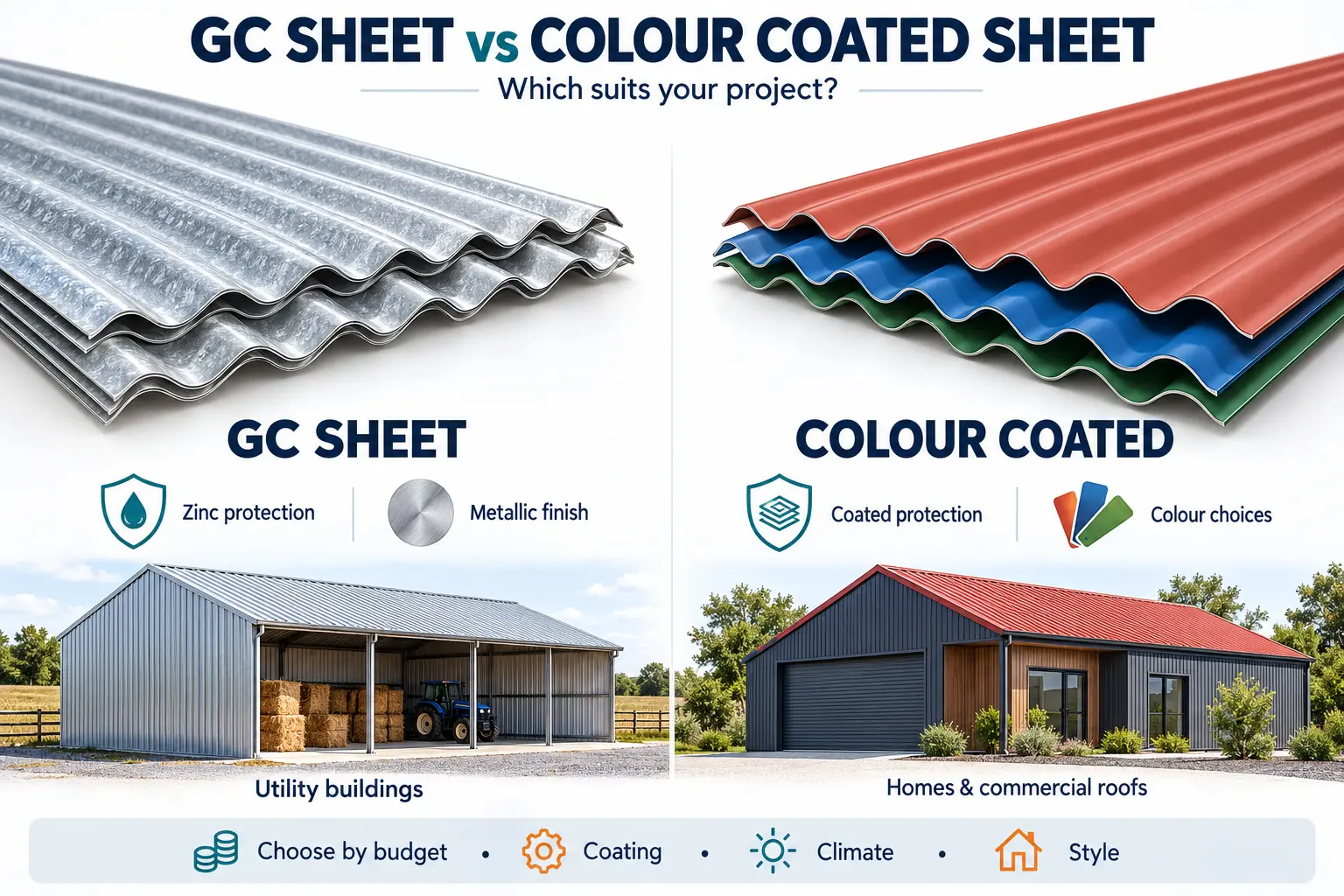
A GC sheet is a galvanized steel sheet with a zinc coating, while a colour coated sheet is a steel sheet with a zinc base and a factory-applied paint layer on top. GC sheets are plain and cost less, but colour coated sheets offer better UV resistance, a range of finishes and longer appearance life. The right choice depends on budget, exposure, and aesthetic needs.
What Is a GC Sheet and How Is It Made?
A GC sheet is a galvanized corrugated or profiled steel sheet. The term “GC” is commonly used in the Indian market for galvanized sheets (sometimes called GI sheets) in corrugated or trapezoidal profiles. The base is cold-rolled steel coil that is cleaned, annealed and passed through a bath of molten zinc, which bonds a protective zinc layer to the steel surface.
The zinc coating works in two ways. It forms a physical barrier that keeps moisture and oxygen away from the steel, and it offers sacrificial protection, meaning the zinc corrodes first if the surface is scratched or cut. The coating weight, usually measured in grams per square metre (g/m²), determines how long the sheet resists corrosion. A higher zinc coating generally means better durability.
GC sheets are widely used because they are strong, economical and easy to fabricate. Their natural silver-grey finish is functional rather than decorative, which makes them a practical choice for industrial sheds, storage facilities and agricultural buildings where appearance is less important than performance.
What Is a Colour Coated Sheet and How Is It Made?
A colour coated sheet, often called a PPGI (pre-painted galvanized iron) or PPGL (pre-painted galvalume) sheet, starts with the same galvanized or galvalume base. The difference is what happens next. Before the coil is slit and profiled, a multi-layer coating system is applied on a continuous line.
A typical colour coated sheet includes a chemical pre-treatment layer for adhesion, a primer, a colour topcoat and often a back coat for protection. The paint is cured in an oven, and the finished coil is then rolled into sheets. Because the coating is applied under controlled factory conditions, the paint thickness and finish are consistent across the entire sheet.
The most common paint systems include polyester (PE), silicone-modified polyester (SMP), and polyvinylidene fluoride (PVDF). Each offers a different balance of colour retention, flexibility and weather resistance. Colour coated sheets are popular for roofing and wall cladding in commercial buildings, factories, warehouses and residential projects where appearance matters.
What Are the Key Differences Between GC Sheet and Colour Coated Sheet?
The two products share a common steel base, but they differ in several important ways. The sections below explain each difference so you can compare them against your project requirements.
Coating and Surface Finish
A GC sheet has only a zinc coating, so its surface is metallic and slightly textured. A colour coated sheet adds a paint system on top of the zinc, which creates a smooth, uniform finish in a wide range of colours. The paint layer adds an extra barrier, but it also means the surface can be damaged by deep scratches or abrasion, which expose the metal underneath.
Corrosion and Weather Resistance
Both products resist corrosion because of the zinc layer. However, a colour coated sheet offers an additional protective barrier from the paint, which can improve resistance to rain, humidity and airborne pollutants when the coating is in good condition. Colour coated sheets with PVDF or SMP coatings generally perform better in harsh outdoor conditions, including coastal and high-UV environments. A plain GC sheet can perform well in dry industrial areas, but it may show white rust sooner in humid or salt-laden air.
Colour and Appearance
GC sheets come in their natural zinc silver-grey finish. Colour coated sheets are available in many shades, including terracotta, green, blue, grey, white and custom colours. Colour matters for buildings that must blend with their surroundings, face public view, or follow a corporate brand identity. Over time, paint can fade or chalk, especially with cheaper polyester systems, so colour retention should be checked when you compare suppliers.
Cost and Value for Money
GC sheets are usually the lower-cost option, which suits budget-sensitive projects and buildings with a limited service life. Colour coated sheets cost more because of the additional coating process, but the premium can be justified by longer appearance life, lower maintenance and better long-term protection. The true comparison is cost per year of service, not just the price per sheet.
Thickness and Structural Performance
Both products are available in similar base thicknesses, typically measured in millimetres or gauge. The structural strength of a sheet depends mainly on the steel thickness and profile geometry, not on the coating. Colour coating does not add structural strength, so a 0.5 mm GC sheet and a 0.5 mm colour coated sheet of the same profile will carry similar loads. Always confirm the required thickness with a structural engineer based on span, purlin spacing and design loads.
GC Sheet vs Colour Coated Sheet: Comparison Table
|
Factor |
GC Sheet |
Colour Coated Sheet |
|
Base material |
Galvanized steel |
Galvanized or galvalume steel |
|
Surface finish |
Silver-grey zinc |
Smooth painted finish |
|
Colour options |
Natural zinc only |
Wide range of colours |
|
Corrosion resistance |
Good, depends on zinc coating weight |
Very good, zinc plus paint barrier |
|
UV resistance |
Not applicable (no paint layer) |
Depends on paint type (PE, SMP, PVDF) |
|
Scratch repair |
Zinc self-heals minor cut edges |
Scratches may expose base metal |
|
Initial cost |
Lower |
Higher |
|
Maintenance needs |
Low to moderate |
Low, with periodic cleaning |
|
Typical use |
Industrial sheds, storage, agricultural buildings |
Commercial, residential, factories, cladding |
Which Is Better for Roofing, Walls and Industrial Sheds?
The better option depends on where and how the sheet is used.
For industrial sheds and storage units: GC sheets are often sufficient, especially where the building is functional, budgets are tight and the environment is not highly corrosive. Colour coated sheets are a good upgrade when the shed is near the coast, in a polluted area, or needs a neat appearance.
For commercial and office buildings: Colour coated sheets are generally the better choice. Their appearance, colour options and longer-lasting finish suit buildings that are seen by clients and the public.
For roofing: Both products work well. Colour coated sheets reflect and absorb heat differently depending on colour, so lighter shades can help reduce interior heat in hot climates. GC sheets can run hotter in direct sun, which may affect comfort in uninsulated buildings.
For wall cladding: Colour coated sheets are more common because cladding is visible and benefits from design flexibility and a clean finish.
For agricultural buildings: GC sheets are widely used for cattle sheds, grain stores and farm structures. Colour coated sheets may be preferred where the building is close to residential areas or where a longer appearance life is needed.
How Do GC Sheets and Colour Coated Sheets Compare in Maintenance?
Both products are low-maintenance, but they need different types of attention.
GC sheets should be inspected for white rust, especially at cut edges, overlaps and fastener holes. Light cleaning and removal of debris helps prevent moisture from sitting on the surface. Where the zinc layer has worn thin, a zinc-rich primer and topcoat can extend service life.
Colour coated sheets need periodic cleaning with mild, pH-neutral detergent to remove dust and deposits. Inspect the paint for chalking, fading, blistering or scratches. Touch up damaged areas with a compatible paint system promptly, because exposed steel is more vulnerable than an intact coating. Avoid high-pressure washing, which can damage the finish.
In both cases, check fasteners, sealants and flashing regularly, since these are common points of water entry regardless of sheet type.
How Should You Choose Between GC Sheet and Colour Coated Sheet?
Choosing the right sheet is a balance of performance, appearance and budget. Consider these questions before placing an order:
- What is the building’s purpose? Functional storage may suit GC sheets, while customer-facing buildings often benefit from colour coated sheets.
- What is the environment like? Coastal, humid or polluted areas call for stronger protection, favouring colour coated sheets with a suitable paint system.
- How long must the roof last? For a short-term or temporary structure, GC sheets may be enough. For long-term investment, a colour coated sheet may offer better value.
- What is the total cost of ownership? Compare initial price, expected maintenance and replacement timing, not just the price per sheet.
- Do aesthetics matter? If the building must match a brand, neighbourhood or design plan, colour coated sheets are the practical choice.
- Is the thickness and coating specification correct? Ask your supplier for zinc coating weight, paint type, thickness, and relevant IS standard compliance, and confirm the design with a structural engineer.
Frequently Asked Questions About GC Sheet and Colour Coated Sheet
Q1. What is the main difference between GC sheet and colour coated sheet?
A GC sheet is a galvanized steel sheet with only a zinc coating, while a colour coated sheet has an additional factory-applied paint layer on top of the zinc. This paint layer provides colour, extra weather protection and a smoother finish.
Q2. Is colour coated sheet better than GC sheet?
Colour coated sheet offers better appearance, colour choice and often better protection in harsh environments. GC sheet is a cost-effective choice for functional buildings where appearance is less important. Neither is universally better; the right choice depends on the project.
Q3. Is a colour coated sheet the same as PPGI?
In most cases, yes. PPGI (pre-painted galvanized iron) is the common term for colour coated galvanized steel sheets. PPGL refers to colour coated galvalume sheets, which use an aluminium-zinc coating as the base.
Q4. Which sheet is cheaper, GC sheet or colour coated sheet?
GC sheets are generally cheaper because they do not require a paint coating process. Prices vary by thickness, coating weight, paint system, profile and market conditions, so request current quotes from your supplier.
Q5. Which sheet lasts longer?
Lifespan depends on zinc coating weight, paint quality, climate and maintenance. A well-specified colour coated sheet in a suitable environment often lasts longer in appearance and corrosion resistance, but both products can deliver long service life when correctly chosen and maintained.
Q6. Can GC sheets be painted later?
Yes, GC sheets can be painted after installation, but surface preparation is important. The zinc surface must be cleaned and treated with a suitable primer for paint to adhere properly. Factory-applied colour coating is generally more consistent and durable.
Q7. Which sheet is better for hot climates?
Lighter-coloured colour coated sheets, particularly those with high solar reflectance, can help reduce heat gain. GC sheets reflect less heat in direct sun, so insulation or ventilation is often recommended in hot regions.
Conclusion
GC sheets and colour coated sheets both offer reliable steel roofing, but they serve different priorities. GC sheets provide a durable, economical solution for functional buildings. Colour coated sheets add appearance, colour options and enhanced protection, making them a strong choice for commercial, residential and exposed projects. Define your budget, environment, appearance needs and service life expectations, then confirm the specification with your supplier and structural engineer.
Need help choosing the right roofing sheet? Contact Gupta Iron & Steel Co for product specifications, coating details and bulk supply quotations.